Economic Opportunities Beckon for South Africa’s Beef Industry: Exports, Market Access and Growth
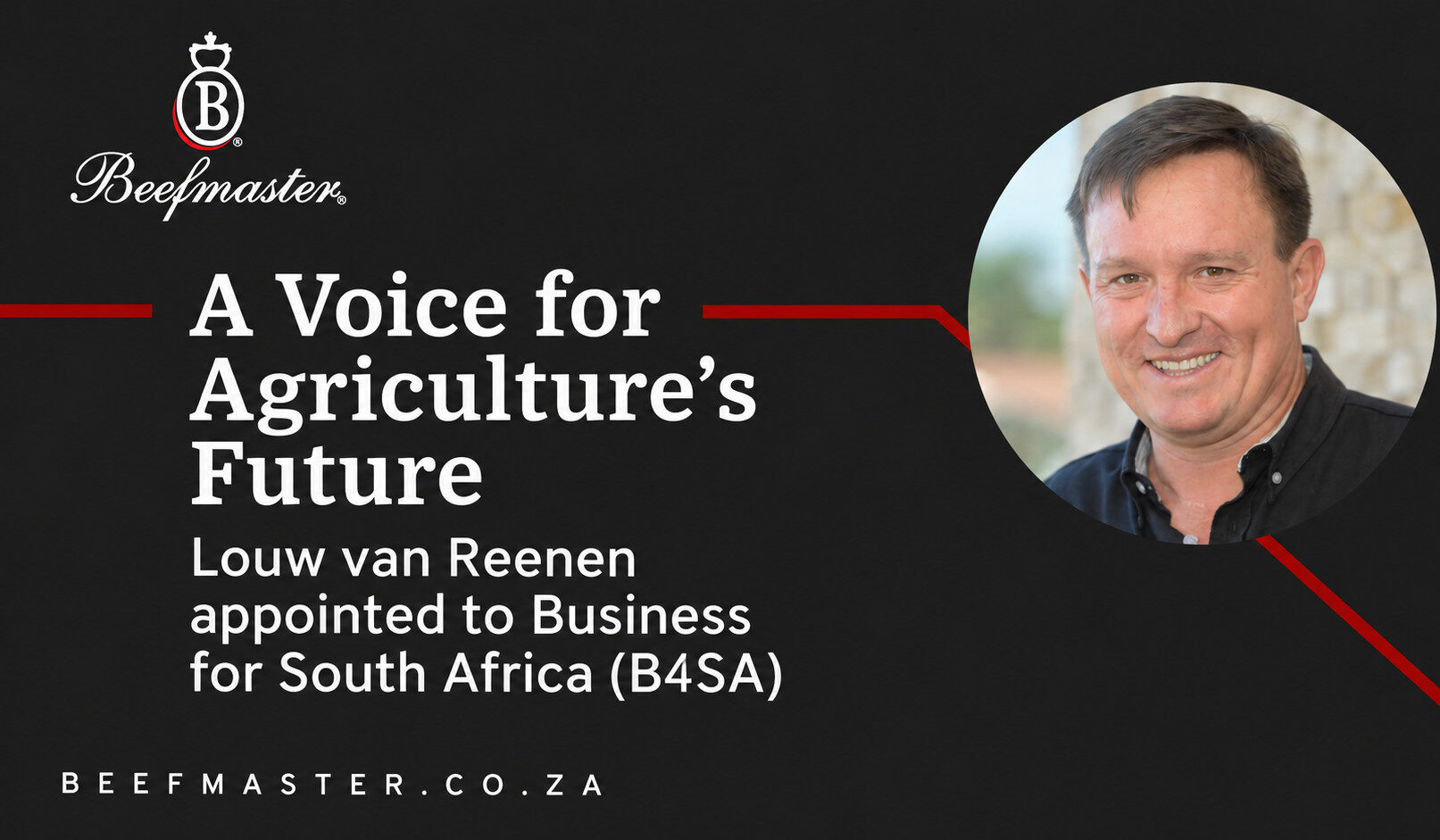
South Africa’s beef industry has significant potential to contribute to economic growth, employment, exports and food security over the next decade, believes Louw van Reenen, Chairman of Beefmaster Group.
Key takeaway: opening new export markets, controlling foot-and-mouth disease through vaccination and closer collaboration between government and business through Business for South Africa (B4SA) could make beef a major driver of rural growth, jobs and exports in South Africa.
“There are reasons to be positive about the potential of the beef industry given rising opportunities, if we can adequately address Foot-and-Mouth Disease (FMD), and focus on opening new markets,” says van Reenen.
How Can the Beef Industry Drive South Africa’s Economic Growth?
The agriculture and agro-processing sectors already contribute a significant 14% to South Africa’s GDP and employ around 1.5 million people, with each job supporting between four and seven dependents. The sector is being positioned as an important driver of rural growth, exports and employment.
“The beef industry has the potential to be a major catalyst for economic growth and job creation within agriculture, contributing to the country’s trade balance and the national coffers,” says van Reenen.
The South African Red Meat Industry Strategy 2030, developed by the Bureau for Food and Agricultural Policy (BFAP) with red meat industry organisations, identified potential for the sector to grow by more than 20% above a business-as-usual scenario, adding more than R12 billion in real terms to South Africa’s agricultural GDP per annum by 2030. Beef is expected to contribute the bulk of that value because it represents roughly 80% of formal red meat production value.
Why Are New Export Markets Important for South African Beef?
Research indicates that beef exports could potentially increase from around 5% of local production to 20%.
“If we look at what will drive the growth of exports, it will be the opening of entirely new markets. We will need to look beyond the markets that are already open to us, particularly in the Middle East. We believe the Far East can be a strategically important trade market for the beef industry,” says van Reenen.
Greater geographic diversification would also reduce the industry’s exposure to geopolitical disruption. In 2026, shipping routes from South Africa to key export markets suffered disruptions around the Suez Canal, the Strait of Hormuz and Yemen, creating delays and additional costs for exporters. Given these geopolitical tensions, airfreight has become a common but expensive alternative to sea freight.
What Does Egypt’s Reopening Mean for South African Beef Exports?
Against this backdrop, van Reenen says the reopening of Egypt to the South African beef industry is a positive development. In September 2026, South Africa and Egypt concluded negotiations on the Veterinary Health Certificate (VHC) governing red meat exports, giving exporters a clear regulatory framework for accessing the Egyptian market.
“It is a good example of what can happen when the government and industry work together on solutions,” says van Reenen, adding that it is imperative that export hurdles are addressed quickly and effectively so that all stakeholders can benefit. Beefmaster is a key beef exporter to Middle Eastern markets.
What Is B4SA and How Will It Support Agriculture?
Van Reenen says that Business for South Africa (B4SA), a collaborative partnership between government and the private sector, is an important initiative that is firmly focused on unlocking the growth of South Africa’s strategically important sectors.
“Agriculture has been identified as a key growth driver by the partnership, with a focus on sectors where South Africa holds strong competitive advantages and where targeted interventions can unlock investment, expand production, and create employment,” says van Reenen, who has been appointed to the partnership to represent the interests of South Africa’s agricultural sector alongside a select group of leaders.
The recent launch of Phase 3 of B4SA builds on the momentum and successes of Phases 1 and 2, during which government and business worked together to address critical constraints to economic growth, including energy, transport and logistics, crime and corruption, and youth employment.
“Phase 3 is focused on significantly increasing output of the agriculture sector and stimulating exports of specific agricultural products like fruit. There is likely a longer-term growth potential for the beef industry,” says van Reenen.
Across the identified interventions within agriculture, the ambition is to recover around R5 billion in export value in the 2026/27 summer season, generate an estimated R12.1 billion to R18.2 billion in additional GDP through increased volumes, and support approximately 100 000 jobs over 12 months.
The partnership has set an ambitious shared goal of helping South Africa achieve sustained GDP growth of more than 3% per year and contributing towards one million additional jobs by 2030.
“I am confident about the partnership because it will unlock the expertise, skills and capacity needed for growth in our economy. There are significant opportunities that can come from it for many industries, including beef, even if some of those opportunities may take time to materialise,” says van Reenen.
How Can Producers Protect the Future of the Beef Industry?
Van Reenen’s call to action to primary producers, role players in the beef and cattle value chains, and others is to invest in the industry to ensure that the sector remains profitable.
“We need to work with government and recognise that government can’t fund everything. Participating on the international stage and being competitive requires new markets to be opened, which takes collaboration, relationship-building and investment. It also means looking at what we can each do to protect the longevity of the industry. Continuing to vaccinate our cattle, for example, is an important investment in combating FMD.
“If we get the fundamentals right, particularly vaccination and market access, the world is our oyster. There is a lot to be positive about, but we need to work together,” concludes van Reenen.
Frequently Asked Questions
What is the economic potential of South Africa’s beef industry?
The South African Red Meat Industry Strategy 2030 identifies potential for the red meat sector to grow by more than 20% above a business-as-usual scenario, adding more than R12 billion a year to agricultural GDP by 2030. Beef represents roughly 80% of formal red meat production value, so it is expected to deliver most of that growth.
How much South African beef could be exported?
Research indicates that beef exports could grow from around 5% of local production to 20%. According to van Reenen, this growth will depend on opening entirely new markets, with the Far East seen as strategically important alongside existing Middle Eastern markets.
Can South Africa export beef to Egypt?
Yes. In September 2026, South Africa and Egypt concluded negotiations on the Veterinary Health Certificate for red meat exports, giving South African exporters a clear regulatory framework for accessing the Egyptian market.
What is B4SA?
Business for South Africa (B4SA) is a partnership between government and the private sector focused on unlocking growth in strategically important sectors. Phase 3 prioritises agriculture, and the partnership aims to help South Africa achieve GDP growth of more than 3% a year and contribute towards one million additional jobs by 2030.
How does foot-and-mouth disease affect South African beef exports?
Foot-and-mouth disease (FMD) restricts access to international beef markets. Van Reenen says that getting the fundamentals right, particularly cattle vaccination and market access, is key to unlocking the industry’s export growth.